Building a competitive wholesale dinnerware collection requires more than selecting attractive plates and bowls. For wholesalers, importers, retailers, and tableware brands, a successful product range should reflect target market preferences, meet different customer needs, and support long-term business growth.
The right wholesale dinnerware collection can help distributors serve different customer segments, create more product opportunities, and maintain a balanced inventory. From everyday ceramic plates to coordinated dinnerware sets, every product should have a clear purpose within the overall collection.
For businesses working with a ceramic tableware manufacturer, understanding how to plan and develop a product range can also make sourcing decisions more efficient. This guide explores the key factors wholesale buyers should consider when building a competitive dinnerware collection.
Understand Your Target Market Before Building a Dinnerware Collection

Before selecting products, wholesale buyers need to understand who they are selling to. Different markets and customer groups may have different expectations regarding product styles, functionality, price points, and purchasing preferences.
Identify Your Main Customer Groups
The first step is to define the customers your wholesale dinnerware collection will serve.
Por exemplo:
- Retailers and homeware stores: Often look for attractive designs, coordinated collections, and products suitable for different household preferences.
- Distributors and importers: May prioritize a broad product selection, competitive wholesale pricing, and reliable supply.
- Hotels and restaurants: Usually focus on practical designs, consistent product availability, and suitability for regular food service.
- E-commerce sellers: May prefer products with distinctive designs, manageable packaging requirements, and clear market positioning.
Understanding these customer groups helps buyers avoid building a collection that is too broad or disconnected from actual market demand.
Research Local Design and Product Preferences
Dinnerware preferences can vary across regions and customer segments. Some markets may favor simple white ceramic plates, while others may show stronger interest in decorative patterns, distinctive colors, or contemporary tableware styles.
Buyers should examine competing products, retail assortments, customer feedback, and market trends before selecting new designs.
It is also useful to consider how dinnerware products fit into local dining habits. For example, markets with strong demand for family dining may offer opportunities for coordinated dinnerware sets, while retailers targeting smaller households may prefer individual plates and bowls.
Understand Different Price Expectations
A competitive product range should reflect the purchasing power and expectations of its target customers.
Rather than sourcing products at only one price level, wholesalers can consider different product tiers. This allows them to serve customers with different budgets while maintaining a clear product positioning.
Understanding the target market first provides a stronger foundation for selecting the right wholesale dinnerware products.
Build a Balanced Wholesale Dinnerware Product Range
A competitive dinnerware collection should offer enough variety to meet different customer needs without becoming unnecessarily complicated. The goal is to create a balanced assortment in which each product category has a clear role.


Include Essential Everyday Dinnerware
Everyday dinnerware provides a foundation for many wholesale collections. Common products include:
- Pratos de jantar
- Pratos laterais
- Soup plates
- Cereal bowls
- Tigelas de servir
These products are suitable for a wide range of retail and hospitality applications. Their practical use also makes them relevant to buyers looking for products with broad customer appeal.
For wholesalers, selecting complementary plates and bowls can create more purchasing options than offering unrelated individual products.
Add Coordinated Dinnerware Sets
Dinnerware sets allow retailers and distributors to offer matching products in convenient combinations.
Depending on the target market, a collection may include combinations of dinner plates, side plates, bowls, and other tableware pieces.
Coordinated sets can help create a more complete product offering and provide opportunities for different retail price levels. Buyers should consider the number of pieces, product combinations, and packaging format when planning these items.
Introduce Specialty and Decorative Products
In addition to essential dinnerware, selected specialty products can make a collection more distinctive.
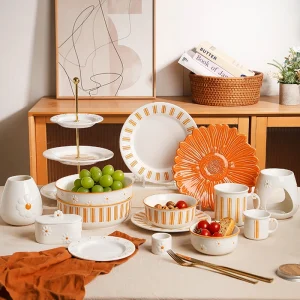
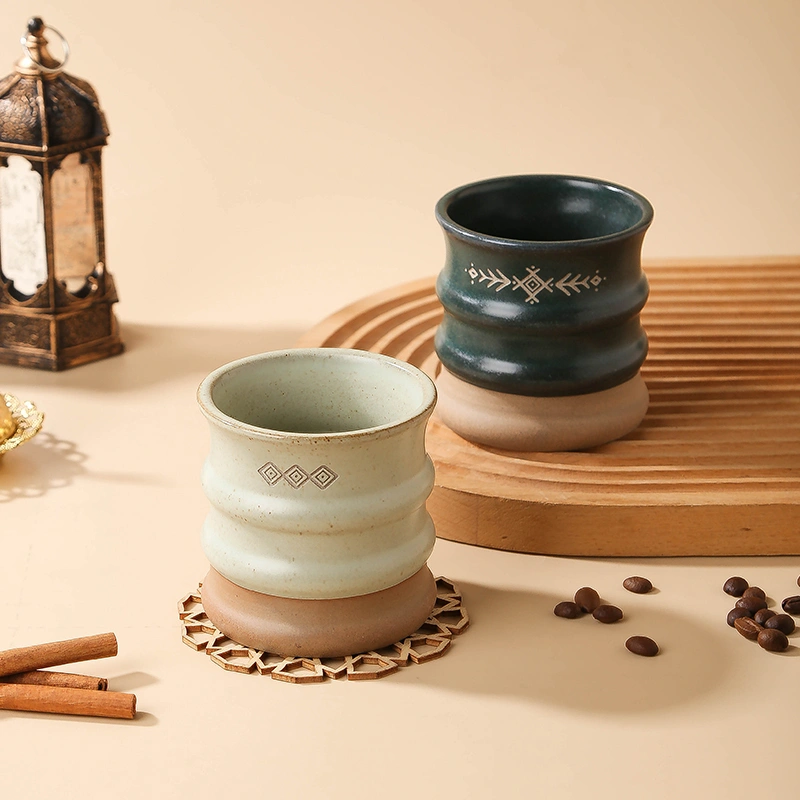
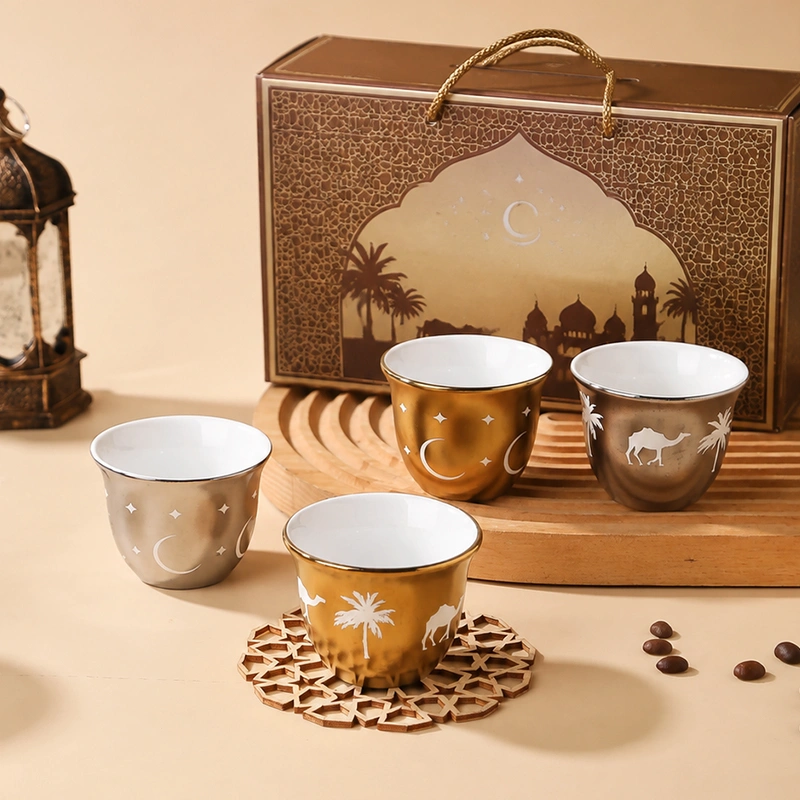
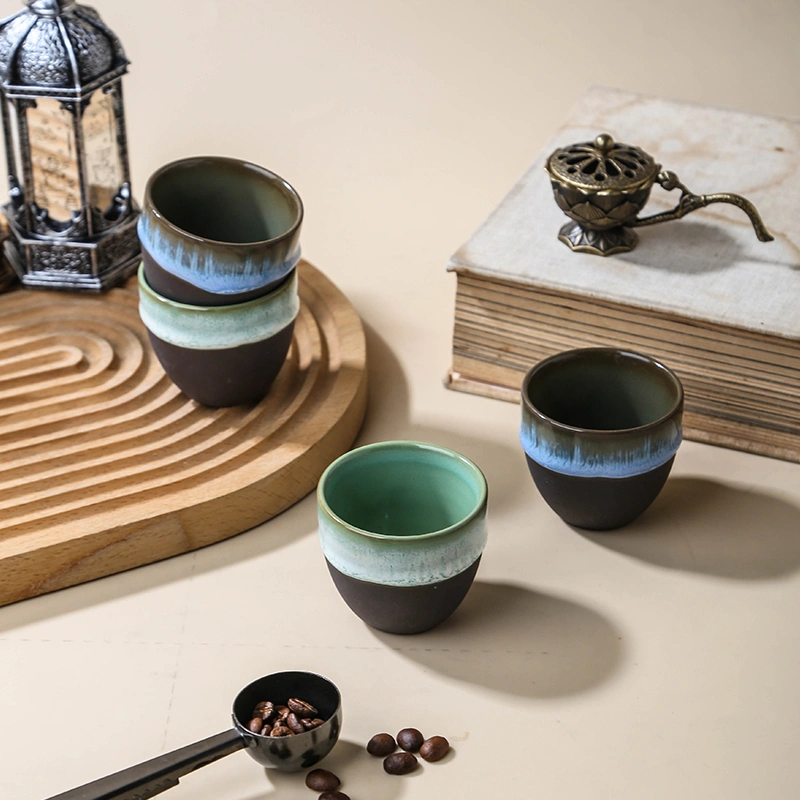
Examples include decorative plates, serving platters, distinctive bowls, and products with special glaze finishes or design details.
These products may appeal to retailers looking to differentiate their assortment or develop more visually distinctive tableware displays.
However, specialty products should complement the main collection rather than make the overall product range difficult to manage.
Consider Complementary Ceramic Tableware
Wholesalers may also expand their product offering with related ceramic products such as mugs, cups, saucers, and serving accessories.
Adding complementary categories can help businesses develop a broader tableware collection and serve customers looking for coordinated products.
The key is to maintain a consistent design direction across different product categories so that the collection feels connected rather than randomly assembled.
Create Product Differentiation in a Competitive Market

When many suppliers offer similar dinnerware products, product differentiation becomes important. A distinctive collection can help wholesalers provide more choices to their customers and establish a recognizable product assortment.
Develop a Consistent Design Direction
A collection should have a clear visual identity. This does not mean every product needs to look exactly the same, but the overall range should have a recognizable design relationship.
For example, buyers can develop a collection around:
- Minimalist and contemporary styles
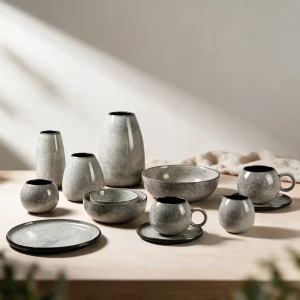
- Natural colors and understated finishes
- Classic white dinnerware
- Decorative patterns and textured surfaces
- Coordinated color combinations
A consistent design direction helps retailers present products together and makes it easier to expand the collection with additional items.
Use Color and Glaze Finishes to Expand Product Options
Color and glaze finishes can create variety within the same product shape.
For example, a basic plate design may be offered in different colors or finishes to suit different retail preferences. This can provide buyers with more assortment options without requiring an entirely different product structure for every variation.
When sourcing from a fabricante de louça de cerâmica, buyers should review samples carefully to understand how colors and finishes appear on the actual products.
They should also confirm whether the manufacturer can maintain consistent appearance across production batches.
Balance Popular Designs with Distinctive Products
A strong wholesale collection should not rely entirely on standard products or unusual designs.
Popular everyday products can provide a practical foundation, while distinctive designs create additional choices for retailers and brands.
This balance allows wholesalers to maintain a recognizable core range while introducing selected products that respond to changing customer preferences.
Develop a Practical Pricing Structure for Wholesale Dinnerware
Product selection and pricing should work together. A well-planned collection should offer suitable options at different price levels without creating unnecessary overlap between products.
Create Entry-Level, Mid-Range, and Premium Options
Wholesale buyers can organize their product assortment into several pricing tiers.
Entry-level products may focus on practical designs and broad market appeal. These products can help retailers serve price-conscious customers.
Mid-range products may combine everyday functionality with more distinctive colors, shapes, or finishes. They can form an important part of a balanced retail assortment.
Premium products may feature more detailed decoration, distinctive designs, or coordinated collection concepts. These products can help retailers target customers looking for more specialized tableware.
The exact pricing structure will depend on manufacturing costs, order quantities, market positioning, and distribution channels.
Evaluate More Than the Unit Purchase Price
Ao comparar louça de cerâmica por grosso, buyers should consider the overall sourcing cost rather than focusing only on the price of individual products.
Entre os fatores importantes contam-se:
- Product specifications and manufacturing requirements
- Order quantities and minimum order requirements
- Packaging materials and carton configuration
- Transportation and shipping costs
- Potential breakage and replacement considerations
A product with a lower purchase price may not necessarily provide better overall value if its packaging or transportation requirements increase the total cost.
Maintain a Clear Position for Each Product
Products within the same collection should have distinguishable roles and price positions.
For example, if several plates have nearly identical designs and prices, they may compete with each other rather than provide meaningful variety.
Buyers should review the overall assortment to identify unnecessary duplication and ensure that each product contributes something useful to the collection.
Balance Product Variety with Inventory Planning
A broad product range can attract different customers, but too many product variations may increase inventory complexity. Wholesale buyers need to balance assortment variety with manageable purchasing and stock requirements.
Identify Core Products for Regular Orders
Core products are the items that form the foundation of a dinnerware collection. They may include commonly used plates, bowls, and coordinated sets.
Wholesalers should identify which products are most relevant to their regular customers and prioritize them when planning purchasing quantities.
Keeping a clear core assortment can also make repeat ordering and stock replenishment easier.
Test New Products Before Expanding the Range
Introducing new colors, shapes, or decorative styles can help businesses explore additional market opportunities.
However, buyers do not need to add every new design to their regular inventory immediately.
Testing selected products with smaller initial orders, where supplier MOQ and production arrangements allow, can help businesses evaluate customer response before making larger purchasing commitments.
Avoid Unnecessary Product Duplication
Too many similar products can make a collection difficult to manage.
For example, offering multiple plate designs with almost identical shapes, colors, and functions may create unnecessary overlap.
A more organized product range should provide meaningful differences in product use, design, or target customer rather than simply increasing the number of SKUs.
Work with a Ceramic Tableware Manufacturer to Develop Your Collection
Once the product direction is clear, selecting a suitable manufacturing partner becomes an important part of the sourcing process.
Uma fonte fiável fabricante de louça de cerâmica can help wholesale buyers evaluate product options, coordinate specifications, and organize production requirements.
Discuss Your Target Market and Product Requirements
Before requesting quotations or samples, buyers should communicate their intended market, customer groups, and product expectations.
Useful information includes:
- Preferred dinnerware categories
- Required product shapes and dimensions
- Target colors and glaze finishes
- Expected order quantities
- Packaging and labeling requirements
Clear communication helps manufacturers understand the project and recommend relevant products.
Review Existing Products and Development Options
Some buyers may prefer to start with existing dinnerware designs, while others may want to develop products with specific colors, decorations, or branding details.
Working with an experienced ceramic tableware supplier can help buyers understand which requirements can be met through existing products and which may involve additional development.
For businesses planning private-label collections, OEM or ODM cooperation may provide opportunities to develop products that better match their market positioning.
Confirm Samples and Production Specifications
Samples are an important step before confirming bulk orders.
Buyers should review product appearance, dimensions, glaze finish, and overall consistency. Any approved specifications should be clearly documented to guide subsequent production.
This is especially important when sourcing several products that need to maintain a consistent design style across the collection.
Plan Packaging for Wholesale Distribution
Packaging should be considered during product planning rather than after manufacturing arrangements are finalized.
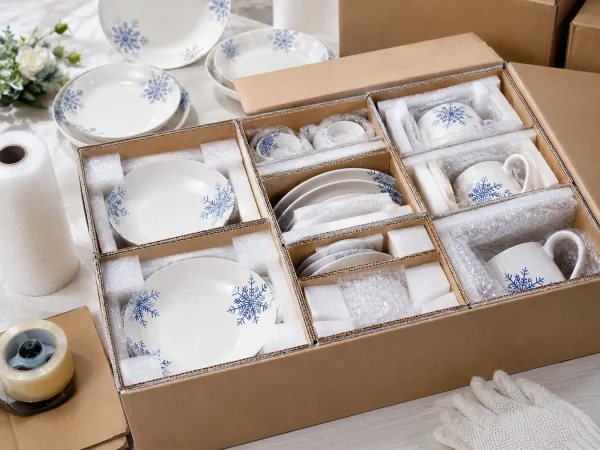
Buyers should discuss individual product protection, set packaging, outer cartons, labeling, and shipping requirements with the manufacturer.
Suitable packaging helps protect ceramic dinnerware during transportation and supports the needs of different wholesale and retail distribution channels.
FAQs About Wholesale Dinnerware Collections
What products should be included in a wholesale dinnerware collection?
A wholesale dinnerware collection commonly includes dinner plates, side plates, soup plates, bowls, and coordinated dinnerware sets. Depending on the target market, wholesalers may also include serving platters, mugs, cups, and other complementary ceramic tableware.
How can wholesalers choose the right dinnerware products for their target market?
Wholesalers should first identify their main customer groups and research local product preferences, price expectations, and competing products. They can then select suitable product categories, designs, and price levels to create a balanced assortment.
Why is product variety important for wholesale dinnerware buyers?
Product variety allows wholesalers to serve different customer preferences and market segments. However, variety should be managed carefully to avoid unnecessary product duplication and excessive inventory complexity.
What should buyers consider when sourcing wholesale ceramic dinnerware?
Buyers should evaluate product design, specifications, quality consistency, order quantities, pricing, packaging, and supplier capabilities. Reviewing samples and confirming production requirements before bulk orders can help reduce sourcing risks.
Can a ceramic manufacturer help develop a private-label dinnerware collection?
Many ceramic manufacturers offer OEM or ODM cooperation, depending on their capabilities. Buyers may discuss product designs, colors, decorative details, logo application, and packaging requirements when developing a private-label collection.
Conclusão
Building a competitive wholesale dinnerware collection requires a clear understanding of target market needs, thoughtful product selection, and effective assortment planning. By combining essential dinnerware with selected specialty products, wholesalers can create a balanced range that serves different customer groups and market positions.
Product differentiation, practical pricing, and inventory planning also play important roles in maintaining a commercially viable collection. Working with an experienced ceramic tableware manufacturer can further support product development, sample approval, and bulk order coordination.
For wholesalers, importers, and retailers, a well-planned dinnerware collection is not simply a group of individual products. It is a structured product offering designed to meet market demand and support long-term business growth.
Sobre a Qingfa Ceramic
Cerâmica Qingfa specializes in ceramic tableware manufacturing, supplying products to international wholesalers, importers, retailers, and brand buyers.
With a range of ceramic tableware products and OEM/ODM cooperation capabilities, Qingfa supports business customers looking to develop and source products for different markets.
Whether you are expanding an existing dinnerware assortment or planning a new wholesale collection, contact Qingfa Ceramic to discuss your product requirements and sourcing plans.
Produtos relacionados
-

Prato de cerâmica personalizado com desenho natalício
-
Conjunto de louça de cerâmica personalizado com padrão floral para venda por grosso de louça de mesa
-
Louça de cerâmica personalizada, conjunto de louça com esmalte cinzento mate
-
Pratos de sobremesa de Natal personalizados Pratos decorativos de férias em porcelana