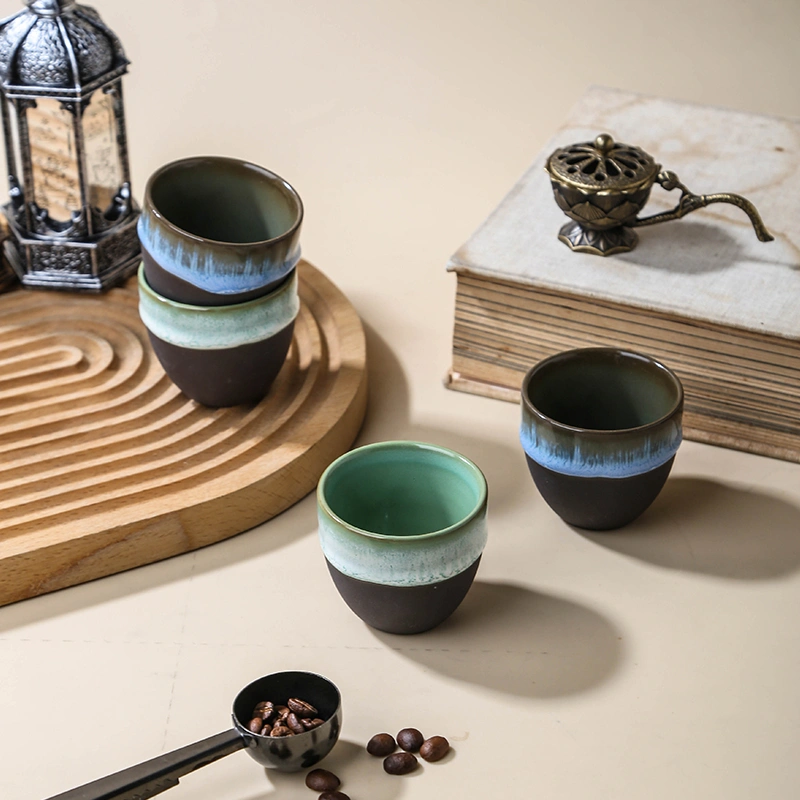
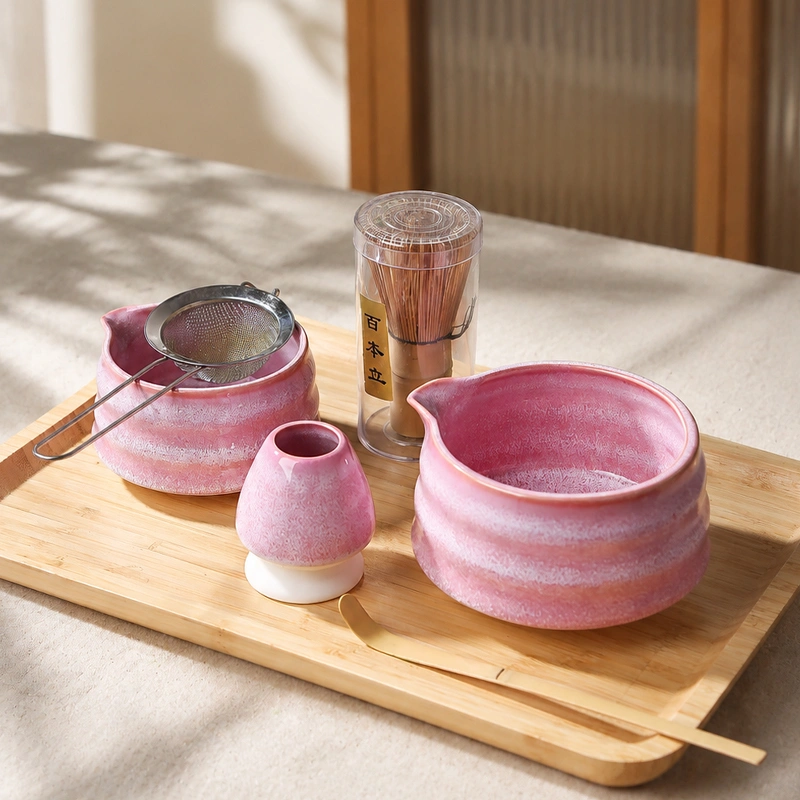
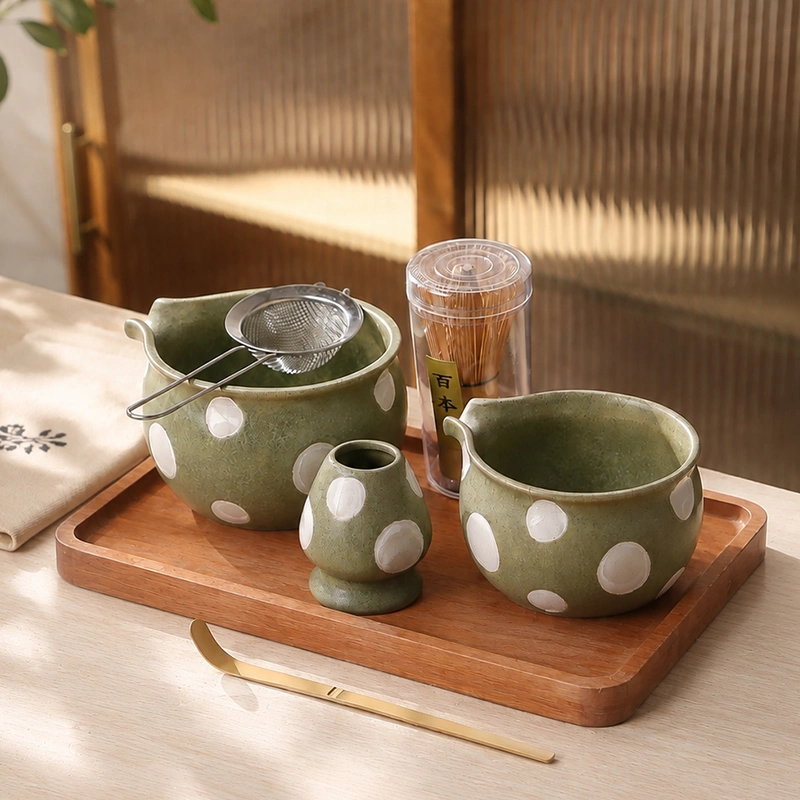
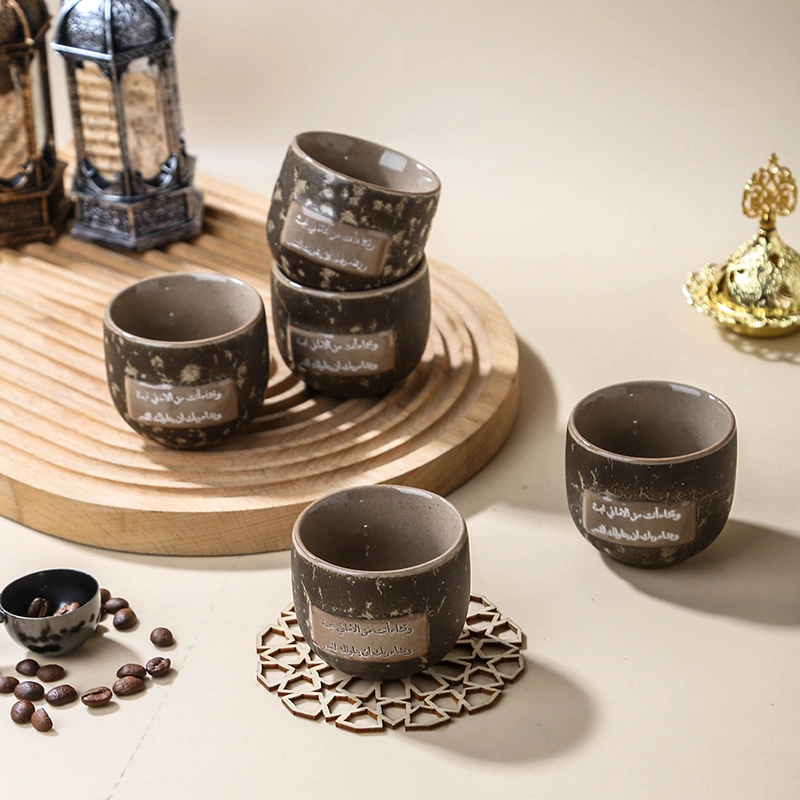
For ceramic brands, importers, wholesalers, and retailers, consistent product quality is one of the most important factors when selecting a reliable ceramic manufacturing partner. When placing large orders, buyers expect every piece to match the approved sample in terms of size, shape, glaze color, decoration, and overall appearance.
Even small differences between production batches can affect product presentation, customer satisfaction, and repeat orders. Professional ceramic manufacturers need to establish a complete quality control system that covers product development, raw material selection, production processes, inspection procedures, and final packaging.
By combining standardized specifications, controlled ceramic manufacturing processes, and multi-stage quality inspections, experienced ceramic factories can reduce quality variations and deliver stable products for global markets.
Why Consistent Quality Matters in Ceramic Manufacturing
For international buyers, product consistency directly influences brand reputation and customer experience. Whether ordering ceramic dinnerware, mugs, bowls, or customized ceramic products, buyers need confidence that every shipment meets the same quality expectations.
In mass production, ceramic products may be affected by multiple factors, including raw materials, forming methods, glaze application, decoration techniques, and firing conditions. Without effective quality control, problems such as color differences, size variations, glaze defects, or surface imperfections may occur.
A reliable ceramic manufacturer focuses on preventing quality issues before they happen instead of relying only on final inspections. A complete manufacturing quality system helps brands maintain stable product performance across initial orders and repeat purchases.
Standardized Product Specifications Before Mass Production
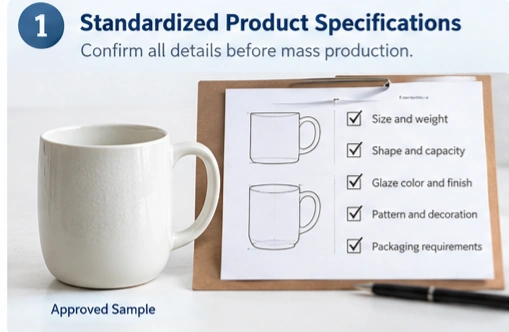
Before starting bulk production, ceramic manufacturers establish detailed product specifications based on customer requirements and approved samples.
Key specifications usually include:
- Product size and dimensions
- Weight and capacity
- Shape and structure
- Glaze color and surface finish
- Pattern and decoration details
- Packaging requirements
- Product testing requirements
An approved sample serves as the production reference throughout the manufacturing process. Production teams compare finished products with the approved sample to ensure that large quantities maintain the same appearance and functional standards.
For OEM ceramic manufacturing projects, clear specifications are especially important because customized designs often involve unique shapes, colors, logos, or packaging requirements.
Controlled Ceramic Manufacturing Processes
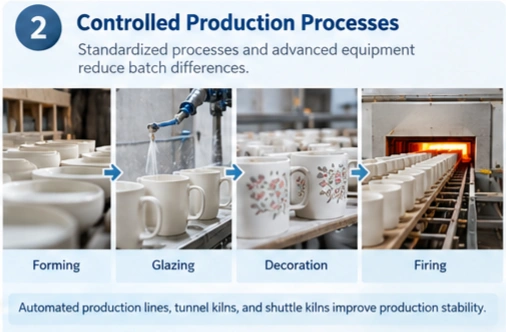
Ceramic production involves several important stages, including forming, drying, glazing, decoration, and firing. Each stage can influence the final product quality.
Professional ceramic factories use standardized operating procedures and controlled production environments to reduce differences between batches.
Important factors include:
- Consistent raw material preparation
- Stable forming processes
- Controlled glaze application
- Accurate firing temperature management
- Regular equipment maintenance
- Production parameter monitoring
Modern equipment, including automated production lines, tunnel kilns, and shuttle kilns, can improve production stability when combined with experienced technicians and strict process management.
A well-controlled ceramic manufacturing process helps manufacturers produce large quantities of products while maintaining consistent quality.
Multi-Stage Quality Inspection Throughout Production
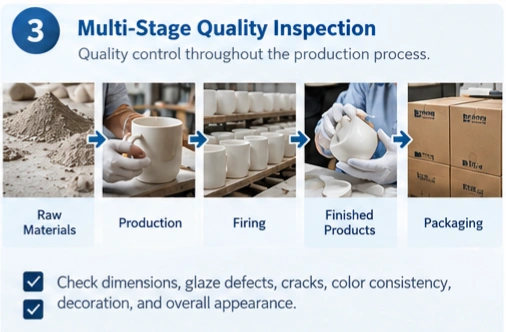
Quality control should not only happen before shipment. A professional ceramic manufacturer conducts inspections throughout the entire production process to identify and solve problems at an early stage.
Typical inspection stages include:
Raw Materials → Production Process → Firing → Finished Products → Packaging
During production, quality teams may check:
- Product dimensions and weight
- Surface smoothness
- Glaze defects
- Cracks or deformation
- Color consistency
- Decoration accuracy
- Overall appearance
For large international orders, manufacturers may also apply sampling inspections or customer-specific quality standards before shipment.
A multi-stage inspection system reduces the risk of defective products reaching customers and helps maintain stable quality for long-term cooperation.
Stable Glaze and Firing Control for Consistent Results
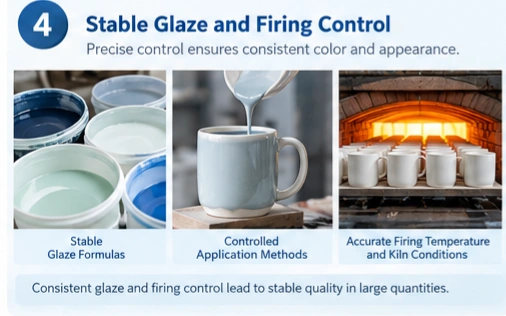
Glaze and firing are two of the most important factors affecting ceramic appearance and durability.
Changes in glaze formulas, application methods, firing temperature, or kiln conditions can create differences in color, texture, and surface finish between production batches.
To maintain consistency, ceramic manufacturers need to carefully control:
- Glaze material formulas
- Glaze application thickness
- Firing temperature
- Kiln atmosphere
- Cooling conditions
For repeat orders, batch-to-batch glaze consistency is especially important. Customers expect new shipments to match previous orders so that products can maintain a unified appearance in retail stores, restaurants, and hospitality projects.
Experienced ceramic factories use controlled firing processes and quality monitoring methods to achieve stable results across large-scale production.
Quality Control for OEM and ODM Ceramic Products
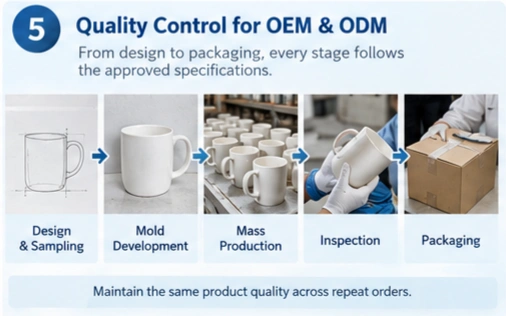
Customized ceramic products require stricter quality management because every detail needs to match the customer’s approved design.
For OEM and ODM ceramic manufacturing projects, quality control should cover the complete process:
Design Development → Sampling → Sample Approval → Mold Development → Mass Production → Inspection → Packaging
Before mass production begins, an approved pre-production sample should be used as the reference for all manufacturing stages.
This approach helps ensure that customized ceramic products maintain consistent quality in:
- Product design
- Shape and structure
- Color and decoration
- Packaging presentation
- Repeat production orders
For brands developing their own ceramic collections, working with an experienced OEM ceramic manufacturer can help reduce production risks and improve product consistency.
Certifications, Testing, and Compliance Requirements
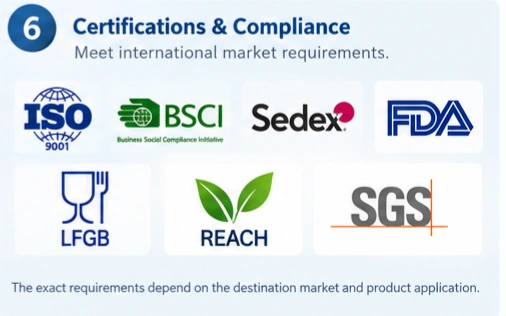
International buyers often evaluate a ceramic manufacturer’s quality management capabilities through certifications, audits, product testing, and inspection reports.
Depending on the target market and product application, requirements may include:
- ISO 9001 quality management systems
- BSCI or SEDEX/SMETA social compliance audits
- FDA-related requirements for applicable products
- LFGB requirements for European food-contact products
- REACH compliance
- Third-party testing and inspection reports
The exact requirements vary depending on the destination market and product usage.
A professional ceramic factory should understand international compliance expectations and provide appropriate documentation to support global business cooperation.
Quality Starts Before Mass Production

Consistent ceramic quality starts before mass production and continues throughout the entire manufacturing process. Final inspection alone cannot guarantee stable results without proper planning, production control, and process management.
A reliable ceramic manufacturer combines standardized product specifications, controlled ceramic production processes, multiple inspection points, and experienced quality teams to reduce variations and deliver dependable products.
For ceramic brands, importers, and wholesalers, choosing a manufacturing partner with a complete quality control system is essential for building long-term product success.
Conclusion
Consistent quality in mass production depends on standardized processes, strict quality control, and experienced manufacturing teams. By controlling every stage from product specifications to final inspection, professional ceramic manufacturers can reduce quality variations and deliver reliable products for global brands and importers.
Choosing the right ceramic manufacturing partner helps businesses maintain stable quality, support repeat orders, and build long-term market success.
Looking for a Reliable Ceramic Manufacturing Partner?
Qingfa Ceramic provides OEM and ODM ceramic manufacturing services for global brands, importers, wholesalers, and retailers. With experience in ceramic product development, sampling, mass production, quality inspection, and customized packaging, Qingfa supports customers from initial concepts to finished products.
From product design to large-scale production, Qingfa Ceramic helps partners create consistent, production-ready ceramic products that meet international market requirements.