Introduction
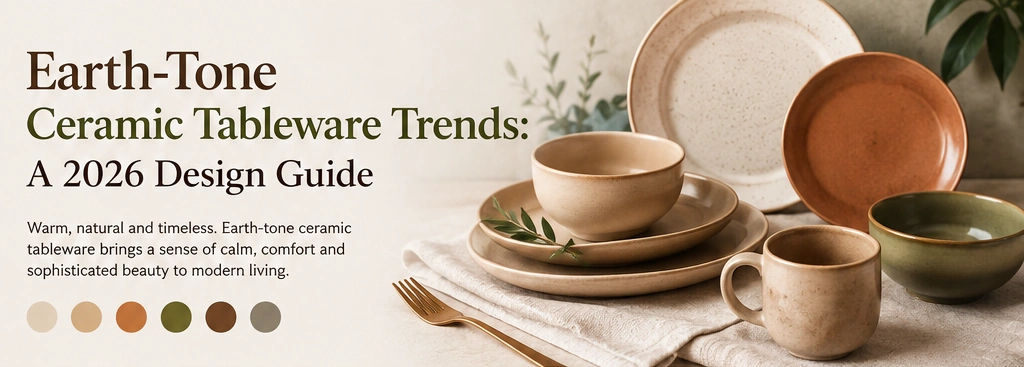
Earth-tone ceramic tableware is becoming increasingly popular as brands and consumers look for warmer, more natural, and timeless designs. For brands, restaurants, and retailers, this trend goes beyond color selection. Earth-tone designs can influence product positioning, collection development, and the overall dining experience.
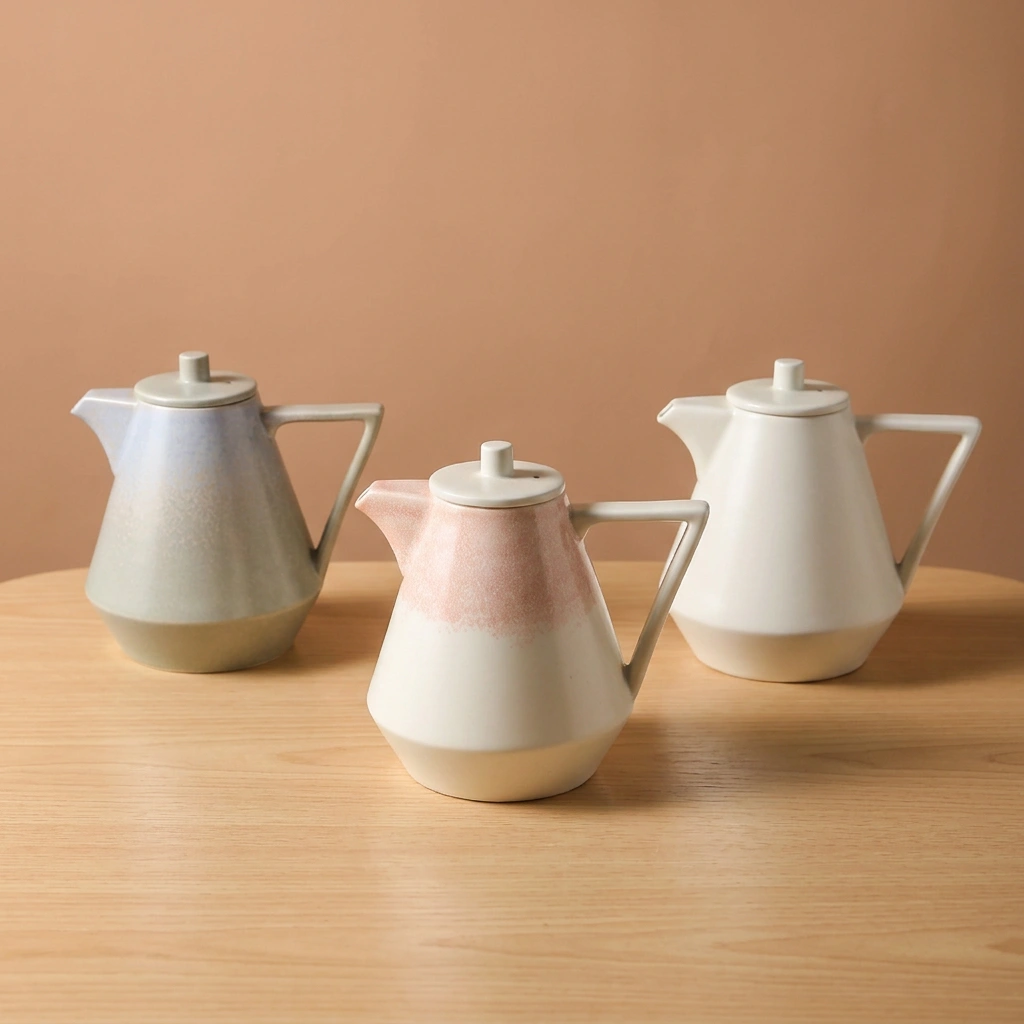
Colors such as warm beige, sand, terracotta, olive green, clay brown, and stone grey can create a relaxed and sophisticated table setting while working well with modern, rustic, Scandinavian and Japanese-inspired interiors.
For brands and B2B buyers, earth tones are more than a color trend. The real opportunity is to combine natural colors, organic shapes, and tactile ceramic finishes into a coordinated product collection.
1. Popular Earth-Tone Colors for Ceramic Tableware
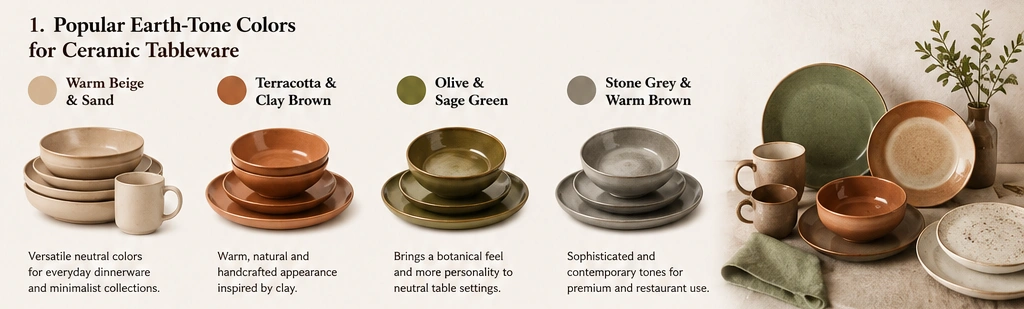
Warm Beige & Sand
Beige and sand are versatile neutral colors that work well for everyday dinnerware.
They are suitable for:
- Dinner plates
- Schalen
- Becher
- Serving ware
These colors are especially suitable for minimalist and Scandinavian-inspired collections.
Terracotta & Clay Brown
Inspired by natural clay, terracotta creates a warm and handcrafted appearance.
It works well with:
- Rustic tableware
- Mediterranean designs
- Artisan-style ceramics
- Organic-shaped dinnerware
Olive & Sage Green
Green tones introduce a natural botanical feeling while adding more personality to a neutral collection.
A combination such as cream + sand + olive green can create a modern and natural aesthetic.
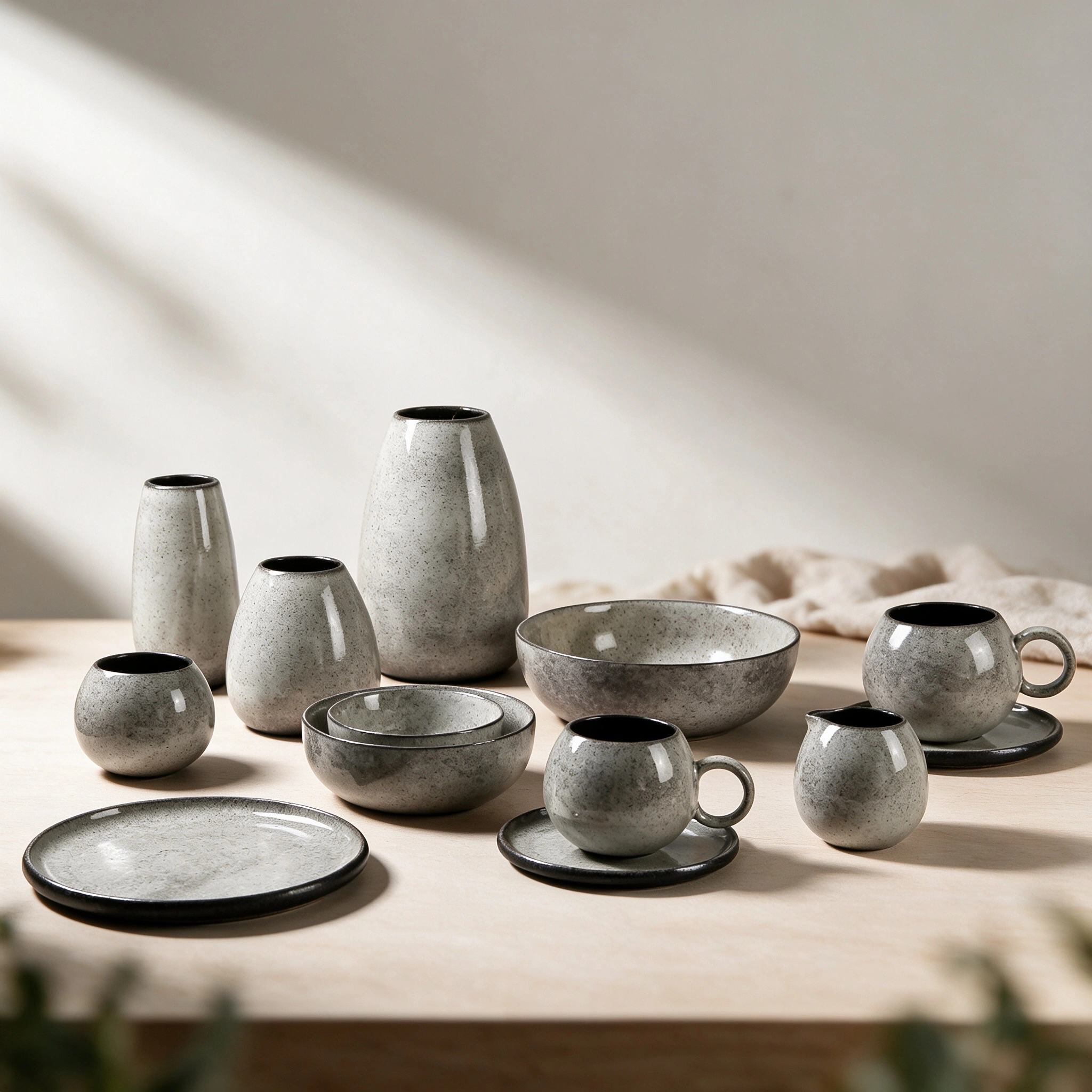
Stone Grey & Warm Brown
Grey and brown provide a more sophisticated and contemporary direction.
They are particularly suitable for:
- Restaurantgeschirr
- Premium dinnerware
- Modern lifestyle brands
2. Earth Tones + Reactive Glaze
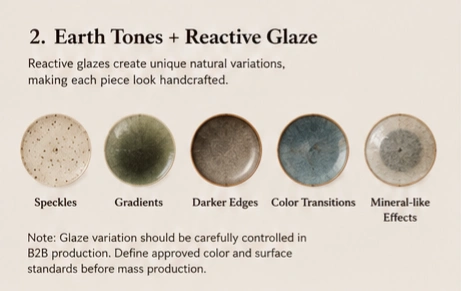
Color is only one part of the trend. Glaze and surface texture are equally important.
Reactive glazes can create natural variations such as:
- Speckles
- Subtle color variation
- Darker edges
- Color transitions
- Mineral-like effects
These effects can give ceramic products a handcrafted aesthetic while remaining suitable for consistent commercial production.
For B2B projects, however, glaze variation should be carefully controlled. Brands should establish an approved color and surface standard before mass production.
3. Matte, Glossy and Mixed Finishes
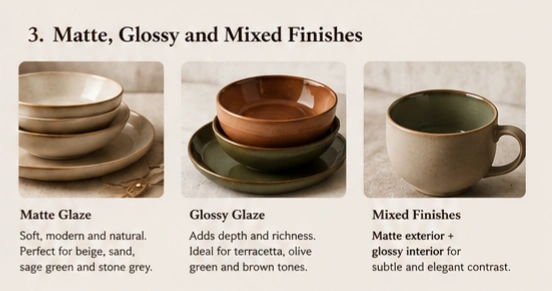
Different glaze finishes can create very different visual effects.
Matte Glasur works particularly well with beige, sand, sage green, and stone grey for a soft and contemporary appearance.
Glänzende Glasur can enhance darker colors such as terracotta, olive green, and brown by adding depth and richness.
Another option is to combine finishes, such as:
Matte exterior + glossy interior
This creates a subtle contrast without making the design complicated.
4. Organic Shapes Complete the Look
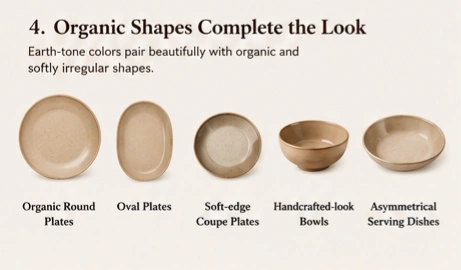
Earth-tone colors work particularly well with organic and softly irregular shapes, making earth-tone ceramic tableware especially suitable for brands seeking a handcrafted and natural aesthetic.
Popular options include:
- Organic round plates
- Oval plates
- Soft-edge coupe plates
- Handcrafted-look bowls
- Asymmetrical serving dishes
The goal is to create an artisanal appearance while maintaining consistent dimensions, stacking, and production efficiency.
This makes organic shapes particularly interesting for brands looking for a balance between handmade aesthetics and scalable manufacturing.
5. How to Build an Earth-Tone Collection
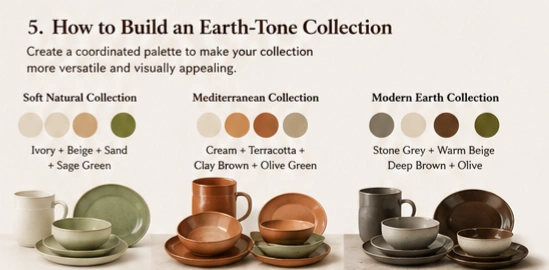
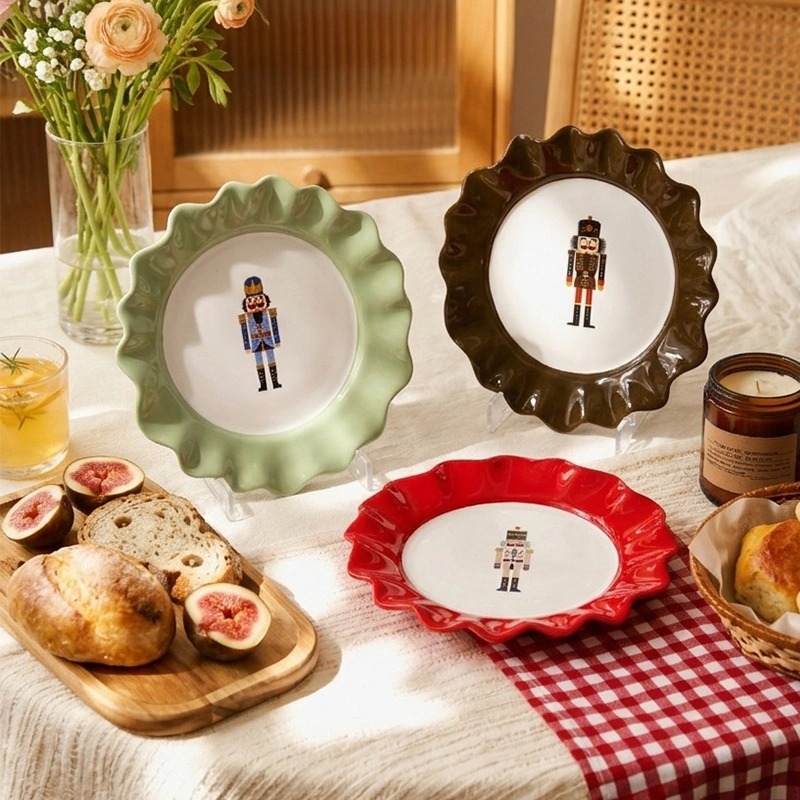
Instead of using one color across every product, brands can create a coordinated palette.
Zum Beispiel:
Soft Natural Collection
Ivory + Beige + Sand + Sage Green
Mediterranean Collection
Cream + Terracotta + Clay Brown + Olive Green
Modern Earth Collection
Stone Grey + Warm Beige + Deep Brown + Olive
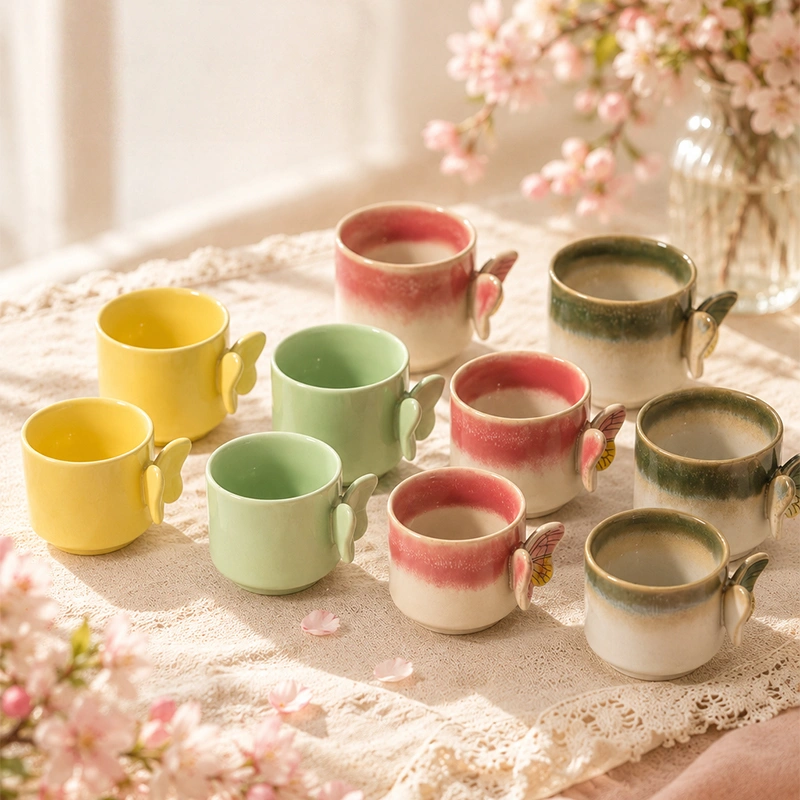
A mix-and-match color strategy can make a collection more visually interesting and create opportunities for individual products, bundles, and gift sets.
6. What B2B Buyers Should Consider
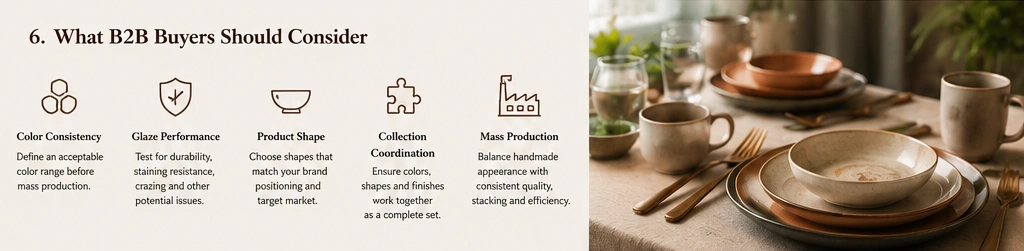
When sourcing earth-tone ceramic tableware, B2B buyers should consider more than appearance. Color consistency, glaze performance, product shape, and production capability can all affect the success of a commercial collection.
Color Consistency
Define an acceptable color range before mass production.
Glaze Performance
Test the glaze for surface quality, durability, staining, crazing, and other potential issues.
Product Shape
Organic shapes can create a handmade look, while clean geometric shapes are better suited to modern and minimalist brands.
Collection Coordination
Colors, shapes, and finishes should work together as a complete collection.
Mass Production
A design that looks good in a sample must also be practical for large-scale production.
The goal is:
Beautiful Design + Consistent Quality + Efficient Manufacturing
7. Developing Earth-Tone Ceramics with QINGFA CERAMIC
For brands developing a new ceramic collection, QINGFA CERAMIC provides customized ceramic manufacturing and product development services.
Our capabilities include:
- Custom ceramic tableware
- OEM / ODM development
- Custom shapes and molds
- Glaze and color development
- Ceramic decoration
- Sample development
- Massenproduktion
- Quality control
- Maßgeschneiderte Verpackungen
A typical development process is:
Design Concept → Shape Development → Sample → Glaze Testing → Approval → Mass Production → Quality Inspection → Packaging
For earth-tone ceramics, the relationship between color, glaze, shape, and surface texture is particularly important.
Schlussfolgerung
Earth-tone ceramic tableware is evolving from a simple color trend into a broader design direction based on natural colors, organic shapes, and tactile finishes.
For brands, the most effective approach is to create a coordinated collection rather than focus on a single color.
Whether you are developing dinnerware, coffee cups, mugs, bowls, or serving ware, an earth-tone palette can provide a warm, versatile, and timeless foundation for a ceramic product line.
About QINGFA CERAMIC
Qingfa-Keramik specializes in ceramic tableware manufacturing and custom product development for brands, restaurants, retailers, and distributors. From shape and mold development to glaze and color selection, sampling, mass production, and quality control, we help turn tableware concepts into commercially ready collections.
For brands developing earth-tone ceramic tableware, our OEM/ODM capabilities support coordinated colors, finishes, shapes, and product sets. Whether you are sourcing a new dinnerware line or developing custom ceramic tableware, we can support your project from concept to production.
Contact Qingfa Ceramic to request a sample, get a quote, or discuss your next ceramic tableware project.